

Setting a New Year’s resolution remains an incredibly popular tradition, with an estimated 30 million people across the UK having made resolutions last year. Common goals for 2025 include improving fitness, managing finances, enhancing mental health, and losing weight. Others focus on spending more time with loved ones, learning new skills, or achieving a better work-life balance. What you might not realize is that Cannabidiol (CBD) could play a role in supporting and helping you achieve your New Year’s goals — and beyond.
Unsure what CBD is? Cannabidiol, better known as CBD, is one of the natural compounds found in the cannabis plant. Unlike delta-9-tetrahydrocannabinol (THC), CBD is a non-psychoactive compound and does not induce the “high” often associated with cannabis. Instead, CBD interacts with our endocannabinoid system (ECS) to regulate several of our cognitive and physical functions, including stress, anxiety and pain. CBD comes in several different forms, including oils, gummies and topicals (products applied to the skin).
Let’s look in more detail at how CBD can support and enhance your New Year’s resolutions.
1. Quit Smoking or Vaping
Approximately 5.4 million adults in England continue to smoke, making it the leading preventable cause of premature death. While quitting smoking can be incredibly challenging — often requiring up to 30 attempts to succeed — incorporating CBD into your plan may provide valuable support.
A range of scientific studies have shown that CBD can help to modulate the rewarding effects of nicotine and other drugs, and can help individuals to battle addiction by reducing cravings. For example, recent research from Washington State University on the Inhibition of Nicotine Metabolism by Cannabidiol (CBD) and 7-Hydroxycannabidiol (7-OH-CBD) suggests that CBD could inhibit the metabolism of nicotine, and therefore curb cravings for the substance.
In addition to this, CBD can help to reduce anxiety and stress. While cigarette smokers are often triggered to smoke by stressful, anxiety-provoking situations, CBD has been shown to have anxiolytic effects, meaning that it can reduce feelings of anxiety and stress.
Unlike nicotine replacement therapies, CBD is also not addictive. This means that individuals can use CBD to help quit smoking without becoming dependent on another substance.
While more research is required to fully understand the relationship between the two, incorporating CBD into your plan may help you to quit. Traditional CBD products, such as oils or gummies, can produce the above mentioned effects, but you can purchase CBD vapes to mimic the sensation of smoking, which can make it easier to quit.

Read our full post on Can CBD Help You Quit Smoking? here.
2. Go Sober
Much like its ability to modulate the rewarding effects of nicotine, CBD is believed to support individuals in their journey to sobriety for two primary reasons:
- CBD replicates many of alcohol’s “positive” effects, such as alleviating social anxiety or relieving pain, but without the associated negative consequences. This makes it a natural and effective alternative to alcohol.
- A 2017 study found that CBD reduced the reinforcing properties, motivation, and relapse related to ethanol (alcohol) in mice, suggesting its potential utility in treating alcohol use disorders.
Whether you’re participating in Dry January or committing to long-term sobriety, CBD could help make the transition smoother. To replicate the taste and experience of alcohol, mix your favourite mocktail ingredients and add a drop of CBD oil (adjusting to your preferred dosage) before stirring to complete. Alternatively, explore the range of non-alcoholic CBD drinks available on the market, designed to mimic the sensation of drinking.
For a cosier alternative, swap your wine glass for a cup of CBD tea or coffee. These beverages are flavourful, provide a natural boost, and can help you relax after a long day.

3. Exercise More
In a survey by Forbes, 48% of people stated that improving fitness was their top priority in 2024, with 38% focusing on weight loss. For those striving to exercise more in the New Year, CBD may provide valuable support due to its well-documented anti-inflammatory properties.
How? Well, when you engage in exercise, you can get microscopic tears in your muscle fibres. The body’s response to this stress is to increase inflammation, which leads to delayed onset of soreness in the muscles (DOMS). It is thought that, by interacting with the endocannabinoid system, CBD can help to reduce inflammation, and in turn, reduce muscle soreness and improve recovery times.
A 2020 study found that trained athletes who took CBD post-workout recovered quicker, and also reported significantly less muscle soreness at 24, 48, 72, and 96 hours post-workout.
Another 2018 review of studies, which looked at studies conducted between 1975 and March 2018 on various types of pain, concluded that CBD was effective in overall pain management and didn’t cause negative side effects. CBD is also thought to reduce sports performance anxiety (SPA), improve focus and improve sleep – both before and after a workout.
Choose from CBD oils which can be taken orally, or topical CBD products which are applied directly to the affected area for targeted relief from aches and pains.
Why does this matter? When you exercise, microscopic tears often form in your muscle fibres. The body’s natural response is to increase inflammation, which leads to delayed onset muscle soreness (DOMS). CBD, by interacting with the endocannabinoid system, is believed to help reduce inflammation, alleviate muscle soreness and speed up recovery times.
A 2020 study showed that trained athletes who used CBD post-workout experienced quicker recovery and significantly less muscle soreness at intervals of 24, 48, 72, and 96 hours afterward.
Additionally, a 2018 review of studies conducted from 1975 to March 2018 highlighted that CBD effectively managed various types of pain without causing adverse side effects. CBD may also help with sports performance anxiety (SPA), enhance focus, and promote better sleep—both before and after exercising.
CBD oils, taken orally, are a popular choice for recovery. Alternatively, topical CBD products applied directly to affected areas can offer targeted relief for muscle aches and pains.

For broader pain relief, products like CBD-infused wraps or roll-ons can alleviate discomfort from sore muscles, stiff joints, and general aches, making them a versatile addition to your fitness routine.
4. Improve Mental Health
Over 35% of people aim to improve their mental health as a New Year’s resolution for 2024. CBD has increasingly been recognized as a potential tool to support mental health, with studies indicating its effectiveness in addressing conditions like depression, seasonal affective disorders, sleep disturbances, schizophrenia, post-traumatic stress disorder, and more. This is largely due to its anxiolytic (anxiety-reducing) properties and its role in preventing the breakdown of serotonin, a key neurotransmitter linked to mood regulation and better sleep. Here’s what the research says:
- Among 387 individuals who currently use or have used CBD, 42.6% reported using it to address anxiety, while 37% used it for stress relief. Of these, 86.5% felt less anxious, and 92.2% experienced reduced stress levels.
- A 2020 study involving 400 CBD users in New Zealand noted improved overall quality of life, reduced pain, decreased symptoms of depression and anxiety, improved appetite, and better sleep.
- In a 2019 case study focusing on 72 adults dealing with anxiety or sleep issues, researchers found that after two months, 78.1–79.2% of participants reported reduced anxiety, and 66.7% reported better sleep.

While further research is necessary, early evidence suggests that CBD might also offer neuroprotective benefits by promoting synaptic plasticity and neurogenesis, both critical factors in addressing depression.
From aiding addiction recovery to improving stress and pain management, CBD’s multifaceted benefits make it a compelling addition to your wellness toolkit for the New Year. However, before incorporating CBD, it’s crucial to consider potential interactions with medications and other factors.
Considerations
If you’re considering using CBD to support your New Year’s resolutions, there are some key factors to keep in mind when choosing a product.
- Medications: CBD has the potential to interact with certain medications, so it’s important to consult with a healthcare professional before taking CBD.
- Type of CBD: Broad-spectrum CBD is a great option for those who want to experience the effects of CBD without consuming THC, the psychoactive compound in the cannabis plant. Clinical reports suggest that broad or full-spectrum CBD may have a better effect due to the number of cannabinoids and other plant compounds they contain that work together, otherwise known as the entourage effect.
- Type of Product: CBD products come in various forms, such as oils, topicals, capsules, edibles, and vape pens. Choose a delivery method and dosage that suits your needs.
- Dosage: Finding the right dose and administration method can be a trial-and-error process as results can vary significantly from person to person. Start with a low dose and gradually increase it while monitoring its effects.
- Source and Quality: Choose CBD derived from organically grown hemp, as this ensures minimal exposure to harmful chemicals. You should also look for third-party laboratory reports to verify how pure and potent your product is, and to ensure there are no contaminants.
- Individual Variability: The effectiveness of CBD may vary from person to person; what works for one individual may not work for another.
Recommended Products
-
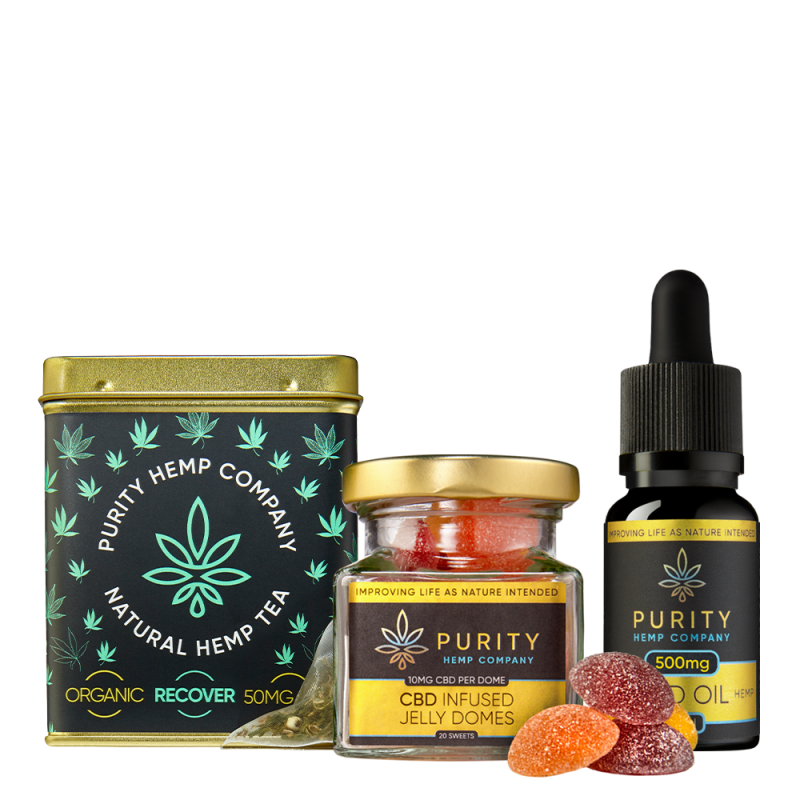 CBD Starter Kit£45.60 — or subscribe and save 20%
 -
 2000mg CBD Oil Tincture£34.00 — or subscribe and save 20%
 -
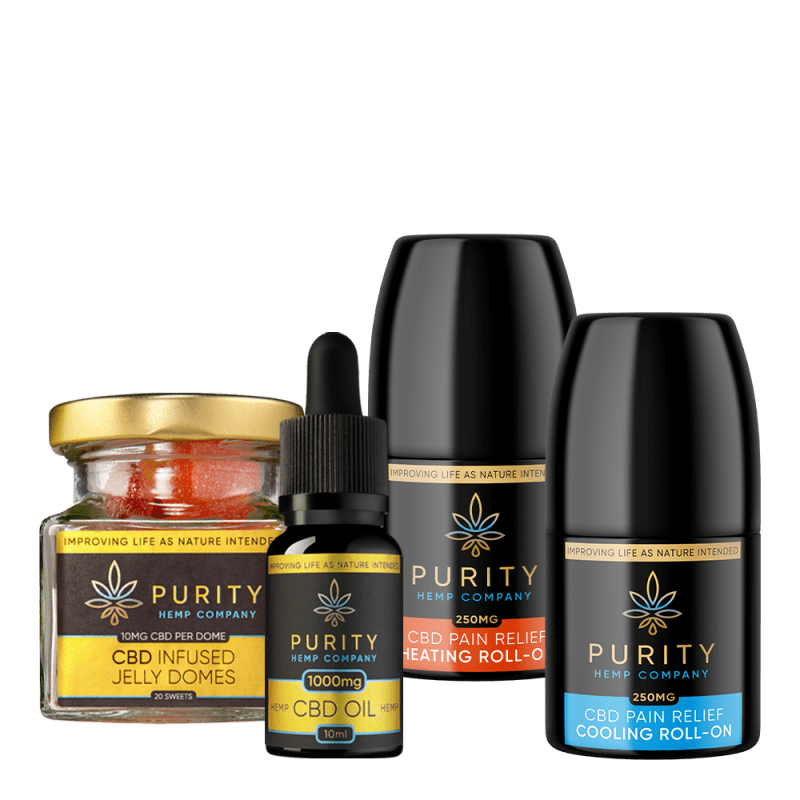 CBD Sports Bundle£105.60 — or subscribe and save 20%
 -
 Harmony Hemp Tea£8.00 — or subscribe and save 20%
Need additional help? Take our CBD Quiz for product recommendations in minutes, or read our full guides on How to Choose the Right CBD Product and The Different Types of CBD.
We are Purity Hemp, the UK’s #1 Online CBD provider. Backed by science, and built on the principles of traceability, transparency & trust, we are dedicated to improving the health & wellness of people around the world. We are proud to be one of the only companies to guarantee full traceability from seed to shelf with our premium range of CBD products, tested by third-party, independent quality control analysts.
Sources
- Fernández-Ruiz J, Sagredo O, Pazos MR, García C, Pertwee R, Mechoulam R, Martínez-Orgado J. (2013) Cannabidiol for neurodegenerative disorders: important new clinical applications for this phytocannabinoid?
- Forbes Health. (2023). New Year’s Resolutions Statistics 2024.
- Gulbransen, G., Xu, W. and Arroll, B. (2020). Cannabidiol prescription in clinical practice: an audit on the first 400 patients in New Zealand.
- Hatchett, A., Armstrong, K., Hughes, B. and Parr, B. (2020). The influence of cannabidiol on delayed onset of muscle soreness.
- Moltke, J., Hindocha, C. (2021) Reasons for cannabidiol use: a cross-sectional study of CBD users, focusing on self-perceived stress, anxiety, and sleep problems.
- Nasrin, S., Coates, S., Bardhi, K., Watson, C., Muscat, J.E. and Lazarus, P. (2023). Inhibition of Nicotine Metabolism by Cannabidiol (CBD) and 7-Hydroxycannabidiol (7-OH-CBD).
- NCIC NHS (2023). Make smoking a thing of the past in 2023.
- OxfordshireMind, C. (2023). New Years Resolutions: What are the numbers and how do we achieve our goals?
- Resstel, L.B.M., Tavares, R.F., Lisboa, S.F.S., Joca, S.R.L., Corrêa, F.M.A. and Guimarães, F.S. (2009). 5-HT1Areceptors are involved in the cannabidiol-induced attenuation of behavioural and cardiovascular responses to acute restraint stress in rats.
- Shannon S, Lewis N, Lee H, Hughes S. (2019) Cannabidiol in Anxiety and Sleep: A Large Case Series.
- Stop Smoking London. (2023). What’s the best vape to help you quit smoking?
- Viudez-Martínez, A., García-Gutiérrez, M.S., Navarrón, C.M., Morales-Calero, M.I., Navarrete, F., Torres-Suárez, A.I. and Manzanares, J. (2018). Cannabidiol reduces ethanol consumption, motivation and relapse in mice.

