

Cold and flu symptoms are common, in particular during the peak of cold and flu season in the winter months. Although uncomfortable, most will go on their own without treatment, but this doesn’t mean you won’t want to make your symptoms better in the meantime. While cold and flu medications are often used to alleviate symptoms, there is a growing interest in how CBD (Cannabidiol) could also help.
In this article, we will explore the relationship between CBD and cold or flu symptoms, the potential benefits, what the existing scientific evidence says, and what you need to consider before using CBD products.
Table of Contents
What is CBD?
Cannabidiol, better known as CBD, is one of the many compounds found in the cannabis plant. Unlike delta-9-tetrahydrocannabinol (THC), CBD is a non-psychoactive compound and does not induce the “high” often associated with cannabis. Instead, CBD interacts with our endocannabinoid system (ECS) to regulate several of our cognitive and physical functions, including pain and mood, which can help with a range of mental and physical ailments, such as migraines, muscle pain, stress and depression.

Can CBD Help with Cold & Flu Symptoms?
While cold and flu medications are often used to alleviate symptoms, there is a growing interest in how CBD’s therapeutic benefits may also help. Here’s how…
Improves Sleep
When we sleep, our bodies produce a protein called cytokines, which target infection and inflammation, and create an immune response. In other words, our bodies work hard to recover and repair themselves when we sleep. This means that sleep is the best medicine for your body while fighting the flu. It is also important for not getting sick in the first place; studies show that people who don’t get quality sleep or enough sleep are more likely to get sick after being exposed to a virus, such as a common cold.
The issue is that it can sometimes be difficult to get a good night’s sleep, in particular if you’re feeling run down. But this is where CBD can help. Studies have shown that CBD can help improve the length and depth of our sleep which could, in turn, help us to recover faster from a cold or flu.
In a 2021 study, 48% of people taking CBD for sleep reported that it helped them to fall asleep quicker, with 40% saying it also helped them to sleep better.
Another study examining the effects of cannabis on insomnia found CBD ‘more effectively decreased symptoms of insomnia’ than delta-9 THC. A systematic review in 2022 also concluded that CBD alone, or with equal quantities of THC, may be beneficial in alleviating the symptoms of insomnia.
A more recent double-blinded, randomised controlled trial from May 2023 found that, in participants taking CBD or CBN (a weaker version of THC), 56 to 75% experienced a clinically important improvement in their sleep quality.
Anti-Inflammatory Properties
A cold is caused by a virus that causes inflammation of the membranes that line the nose and throat. CBD has proven anti-inflammatory and muscle-relaxing properties, which could help to relieve symptoms such as a blocked nose and sore throat. The muscle-relaxing properties could also help to relieve muscle aches and pains that are common when you have the flu.
One 2019 study confirmed that CBD demonstrates anti-inflammatory activity and antioxidant effects by activating PPARs, either directly or indirectly.
This is supported by a 2021 systematic review which concluded that CBD and CBD+THC combination exert a predominantly anti-inflammatory effect, whereas THC alone does not reduce pro-inflammatory or increase anti-inflammatory cytokines.

General representation of the signalling pathways involved in CBD anti-inflammatory effects from Cannabis sativa L. and Nonpsychoactive Cannabinoids: Their Chemistry and Role against Oxidative Stress, Inflammation, and Cancer (2018).
Analgesic (Pain Relieving) Properties
It is thought that CBD can increase the body’s levels of anandamide, a compound associated with regulating pain which can reduce pain perception, which may benefit people experiencing painful symptoms of the cold and flu, such as headaches and sore muscles. Although further research is required, initial research shows promising results for CBD’s treatment of different types of pain.
A 2017 review of studies concluded that, in adults with chronic pain, patients who were treated with cannabis or cannabinoids are more likely to experience a clinically significant reduction in pain symptoms.
A later 2018 review of studies concluded that cannabinoids — due to their anticonvulsant, analgesic, antiemetic, and anti-inflammatory effects — present a promising class of compounds for both acute and prophylactic treatment of migraine pain.
Another 2018 review of studies found ‘accumulating evidence for various therapeutic benefits of cannabis/cannabinoids, especially in the treatment of pain, which may also apply to the treatment of migraine and headache.’
In 2020, in a four-week trial evaluating the efficacy of topical CBD oil for pain management, participants experienced a significant reduction in intense, sharp pain after using a treatment containing 250 milligrams of CBD.
Antimicrobial Properties
An antimicrobial is an agent that destroys microorganisms or suppresses their multiplication or growth, and antimicrobials are often used to prevent or treat infections.
CBD is not ready to be used as an antimicrobial treatment just yet. However, studies have shown that CBD can kill both Gram-positive and Gram-negative bacteria — including some strains that are resistant to traditional antibiotics — which makes it a promising antimicrobial agent for infections in the future.
Indeed, one research found that CBD seems to boost the body’s natural defence mechanisms against the SARS-CoV-2 virus — which is responsible for COVID-19 — and may even prevent the virus from replicating in lung cells.
Considerations
If you’re considering using CBD to help relieve your cold and flu symptoms, there are some key factors to keep in mind when choosing a product.
- Medications: CBD has the potential to interact with certain medications, so it’s important to consult with a healthcare professional before taking CBD.
- Type of CBD: Broad-spectrum CBD is a great option for those who want to experience the effects of CBD without consuming THC, the psychoactive compound in the cannabis plant. Clinical reports suggest that broad or full-spectrum CBD may have a better effect due to the number of cannabinoids and other plant compounds they contain that work together, otherwise known as the entourage effect.
- Type of Product: CBD products come in various forms, such as oils, topicals, capsules, edibles, and vape pens. Choose a delivery method and dosage that suits your needs.
- Dosage: Finding the right dose and administration method can be a trial-and-error process as results can vary significantly from person to person. Start with a low dose and gradually increase it while monitoring its effects.
- Source and Quality: Choose CBD derived from organically grown hemp, as this ensures minimal exposure to harmful chemicals. You should also look for third-party laboratory reports to verify how pure and potent your product is, and to ensure there are no contaminants.
- Individual Variability: The effectiveness of CBD may vary from person to person; what works for one individual may not work for another.
Recommended Products
CBD Oil: The most popular method for taking CBD is CBD oil, which can be taken by placing drops under your tongue or by adding it to a beverage.
CBD Tea: A CBD tea combines the therapeutic benefits of CBD with the soothing and aromatic properties of herbs, such as ginger, chamomile and lavender.
CBD Gummies: CBD gummies offer a delicious and discreet way to take CBD. Our vegan gummies come in three natural flavours: orange, grape and lemon.
-
 CBD Jelly Domes x20£12.00 — or subscribe and save 20%
 -
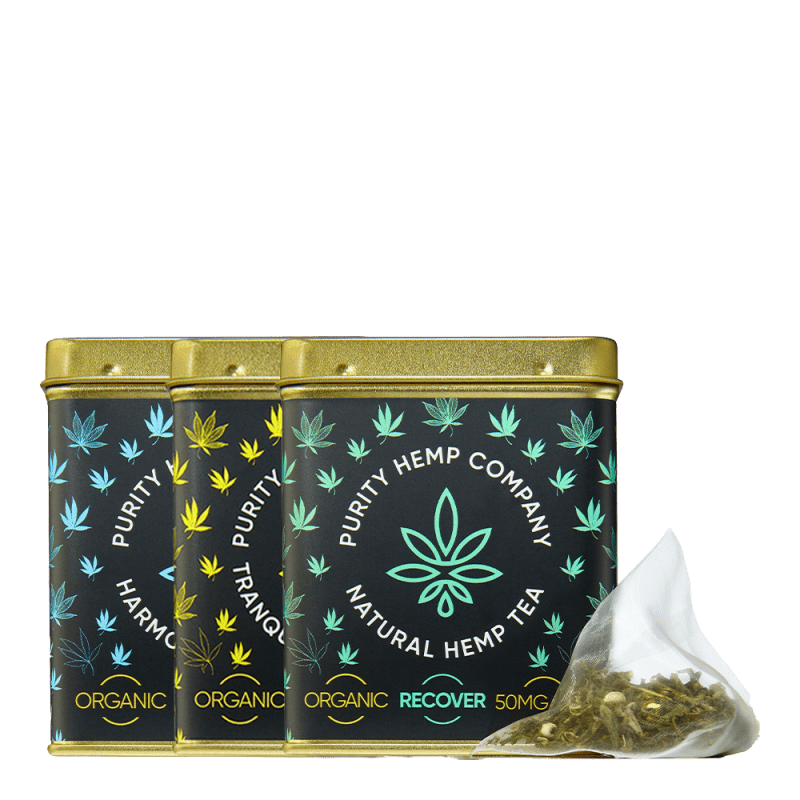 Time for Tea – CBD Tea Set£42.00 — or subscribe and save 20%
 -
 500mg CBD Oil Tincture£15.00 — or subscribe and save 20%
Need additional help? Take our CBD Quiz for product recommendations in minutes, or read our full guides on How to Choose the Right CBD Product and The Different Types of CBD.
We are Purity Hemp, the UK’s #1 Online CBD provider. Backed by science, and built on the principles of traceability, transparency & trust, we are dedicated to improving the health & wellness of people around the world. We are proud to be one of the only companies to guarantee full traceability from seed to shelf with our premium range of CBD products, tested by third-party, independent quality control analysts.
Sources
- Atalay S, Jarocka-Karpowicz I, Skrzydlewska E. (2019) Antioxidative and Anti-Inflammatory Properties of Cannabidiol.
- Baron EP. (2018) Medicinal Properties of Cannabinoids, Terpenes, and Flavonoids in Cannabis, and Benefits in Migraine, Headache, and Pain: An Update on Current Evidence and Cannabis Science.
- Blaskovich, M.A.T., Kavanagh, A.M., Elliott, A.G. et al. (2021) The antimicrobial potential of cannabidiol.
- Di Martino P. (2022) Antimicrobial agents and microbial ecology.
- Feeds, N.R.C. (US) C. to S. the H.H.E. of S.A.U. in A. (1980). The Use of Antimicrobial Agents.
- Healthline. (2018). Is It Safe to Smoke Marijuana If You Have a Cold or the Flu?
- Healthline. (2018). 12 Tips for Flu Recovery: Stay Home, Hydrate, Sleep and More.
- Henshaw FR, Dewsbury LS, Lim CK, Steiner GZ. (2021) The Effects of Cannabinoids on Pro- and Anti-Inflammatory Cytokines: A Systematic Review of In Vivo Studies. Cannabis Cannabinoid Res.
- Hopkins Medicine (2023). Common Cold.
- Leimuranta P, Khiroug L, Giniatullin R. (2018) Emerging Role of (Endo) Cannabinoids in Migraine. Front Pharmacol.
- Moltke J, Hindocha C. (2021) Reasons for cannabidiol use: a cross-sectional study of CBD users, focusing on self-perceived stress, anxiety, and sleep problems.
- Medical News Today (2020). CBD oil for pain management: Effects, benefits, and uses.
- National Academies of Sciences, Engineering, and Medicine (2017). Therapeutic Effects of Cannabis and Cannabinoids
- UC Health. (2020). The Sleep Routines that Strengthen your Immune System
- Nguyen LC, Yang D, Nicolaescu V, Best TJ, Ohtsuki T, Chen SN, Friesen JB, Drayman N, Mohamed A, Dann C, Silva D, Gula H, Jones KA, Millis JM, Dickinson BC, Tay S, Oakes SA, Pauli GF, Meltzer DO, Randall G, Rosner MR. (2021) Cannabidiol Inhibits SARS-CoV-2 Replication and Promotes the Host Innate Immune Response. bioRxiv
- Olson, E. (2018). Can lack of sleep make you sick? [online] Mayo Clinic.
- Pellati, F., Borgonetti, V., Brighenti, V., Biagi, M., Benvenuti, S. and Corsi, L. (2018). Cannabis sativa L. and Nonpsychoactive Cannabinoids: Their Chemistry and Role against Oxidative Stress, Inflammation, and Cancer.
- Ranum RM, Whipple MO, Croghan I, Bauer B, Toussaint LL, Vincent A. (2023) Use of Cannabidiol in the Management of Insomnia: A Systematic Review. Cannabis Cannabinoid Res.
- Saleska JL, Bryant C, Kolobaric A, D’Adamo CR, Colwell CS, Loewy D, Chen J, Pauli EK. (2023) The Safety and Comparative Effectiveness of Non-Psychoactive Cannabinoid Formulations for the Improvement of Sleep: A Double-Blinded, Randomized Controlled Trial. J Am Nutr Assoc.
- Wikipedia. (2023). Entourage effect.

