

Seasonal Affective Disorder, otherwise known as SAD, is a type of depression that comes and goes with the seasons. In general, symptoms start in the autumn and continue (or worsen) into the winter, and then improve during spring and summer. In rarer cases, people have the opposite; symptoms that begin in spring or summer, and get better during autumn and winter. It’s thought that SAD affects around 2 million people in the UK and more than 12 million people across northern Europe. The symptoms of SAD are similar to depression, and include:
- a persistent low mood
- a loss of pleasure or interest in normal everyday activities
- feelings of despair, guilt and worthlessness
- feeling lethargic and/or sleeping longer than normal
- craving carbohydrates, overeating and gaining weight
- decreased sex drive.
For those with summer-onset seasonal affective disorder, symptoms might include trouble sleeping (insomnia), poor appetite, weight loss, anxiety and agitation.
The exact cause of SAD is not fully understood, but it’s often linked to reduced exposure to sunlight which impacts the production of melatonin and serotonin, and disrupts the body’s internal clock (circadian rhythm). People with a family history of depression or bipolar disorder are also at higher risk of SAD.
Traditional treatments for SAD include light therapy, where a light box is used to simulate exposure to sunlight, talking therapies, such as cognitive behavioural therapy (CBT), and antidepressants, such as serotonin reuptake inhibitors (SSRIs). Lifestyle measures, such as spending more time outside and increasing your vitamin D intake can also help symptoms.

SAD lamps provide you with a blast of light that hits your retina and triggers the brain to stop making so much melatonin, which will help lift your mood.
While these conventional treatments are valuable, there is a growing interest in complementary and alternative therapies to manage SAD symptoms. One of these is Cannabidiol, better known as CBD, which has shown promise in helping to manage the cause and symptoms of SAD.
Can CBD Help With Seasonal Depression?
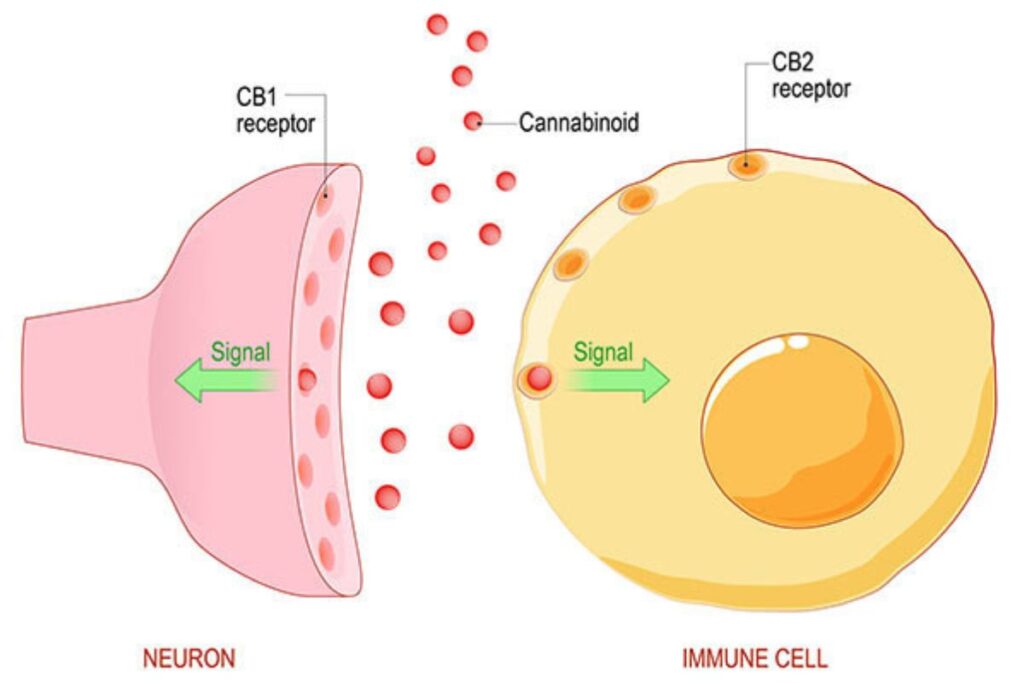
Cannabidiol, better known as CBD, is one of the many compounds found in the cannabis plant. Unlike delta-9-tetrahydrocannabinol (THC), CBD is a non-psychoactive compound and does not induce the “high” often associated with cannabis. In humans, CBD interacts with our endocannabinoid system (ECS) to regulate several of our cognitive and physical functions, including mood, stress, anxiety and pain, to help with a range of mental and physical ailments, such as migraines, seizures, psychosis, muscle pain, incontinence and eczema. Let’s look at how CBD is thought to help with SAD.
Serotonin & Dopamine Production
Referred to as the “feel-good” chemical, serotonin is a neurotransmitter known to play a key role in mood regulation, and its dysregulation is implicated in various mood disorders, including depression. Although CBD doesn’t boost serotonin levels, CBD has been shown to interact with serotonin receptors in the brain — specifically the 5-HT1A receptor — which might affect how your brain’s chemical receptors respond to the serotonin that’s in your system. Similar to traditional antidepressants, it is thought that CBD binds to your receptors to slow or stop the degradation of serotonin. This is based on a number of scientific studies on humans and animals.
A 2014 animal study found that CBD’s effect on chemical receptors in the brain produced both antidepressant and anti-anxiety effects.
In another study on mice, researchers found that when depressed rodents were given CBD, it impacted the way their brains’ chemical receptors responded to serotonin, producing an antidepressant effect. A 2018 review also noted that many studies have shown anti-anxiety, antidepressant, and antipsychotic actions in animal models.
An open-label trial involving 31 young people aged 12-25 years with cognitive-behavioural therapy and/or antidepressant medication saw a 42.6% reduction in Overall Anxiety Severity and Impairment Scale (OASIS) scores.
Another 2020 study concluded that chronic administration of CBD (100 mg/kg) induced antidepressant-like effects by increasing 5-HT and NA levels in the HPC.
Anxiolytic (Anti-Anxiety) Properties
Stress and anxiety often accompanies traditional depression, and can exacerbate its symptoms. CBD is well-known for its anxiolytic (anxiety-reducing) properties, which could also help people to manage their depression. Similar to how it can help slow or stop the degradation of serotonin, CBD is thought to bind to our ECS receptors to regulate the symptoms.
Of 387 current or past-CBD users, 42.6% use CBD for anxiety and 37% use CBD for stress. Of those 42.6%, 86.5% responded that they felt less anxious. And for those using CBD for stress, 92.2% responded that they felt less stressed.
Researchers evaluated the effects of CBD treatment in 72 adults with either anxiety or sleep problems and, after 2 months, 78.1–79.2% of participants reported improvements in anxiety symptoms.
A review of eight related studies concluded that CBD has a promising role as alternative therapy in the management of anxiety disorders.
Neuroprotective Effects
Chronic inflammation has been linked to the development and progression of depressive disorders. CBD exhibits anti-inflammatory properties which have shown promise in protecting brain cells from damage and inflammation, including in neurodegenerative disorders like Alzheimer’s Disease. Researchers also believe CBD helps repair neural circuitry in the prefrontal cortex and hippocampus, which get damaged as a result of depression.
Considerations & Recommendations
While there is a growing body of research on CBD and depression, limited studies specifically address its efficacy in Seasonal Affective Disorder. However, findings do suggest that CBD may have antidepressant-like effects, and SAD is a type of depression.
If you’re considering using CBD to manage your SAD symptoms, here are some key factors to keep in mind when choosing a product.
- Medications: CBD has the potential to interact with certain medications, including antidepressants. Therefore, it’s important to consult with a healthcare professional before taking CBD.
- Type of CBD: Broad-spectrum CBD is a great option for those who want to experience the effects of CBD without consuming THC, the psychoactive compound in the cannabis plant. Some clinical reports suggest that broad or full-spectrum CBD may have a better effect due to the number of cannabinoids and other plant compounds they contain that work together, otherwise known as the entourage effect.
- Type of Product: CBD products come in various forms, such as oils, topicals, capsules, edibles, and vape pens, so you should choose a delivery method and dosage that suits your needs.
- Source and Quality: Choose CBD derived from organically grown hemp, as this ensures minimal exposure to harmful chemicals. You should also look for third-party laboratory reports to verify how pure and potent your product is, and to ensure there are no contaminants.
- Dosage: Finding the right dose and administration method can be a trial-and-error process as results can vary significantly from person to person. Start with a low dose and gradually increase it while monitoring its effects.
- Individual Variability: The effectiveness of CBD may vary from person to person; what works for one individual may not work for another.
-
 CBD Jelly Domes x20£12.00 — or subscribe and save 20%
 -
 Harmony Hemp Tea£8.00 — or subscribe and save 20%
 -
 4000mg CBD Oil Tincture£87.50 — or subscribe and save 20%
Need additional help? Take our CBD Quiz for product recommendations in minutes, or read our full guides on How to Choose the Right CBD Product and The Different Types of CBD.
We are Purity Hemp, the UK’s #1 Online CBD provider. Backed by science, and built on the principles of traceability, transparency & trust, we are dedicated to improving the health & wellness of people around the world. We are proud to be one of the only companies to guarantee full traceability from seed to shelf with our premium range of CBD products, tested by third-party, independent quality control analysts.
Sources
- Abame, M.A., He, Y., Wu, S., Xie, Z., Zhang, J., Gong, X., Wu, C. and Shen, J. (2021). Chronic administration of synthetic cannabidiol induces antidepressant effects involving modulation of serotonin and noradrenaline levels in the hippocampus.
- Berger M, Li E, Rice S, Davey CG, Ratheesh A, Adams S, Jackson H, Hetrick S, Parker A, Spelman T, Kevin R, McGregor IS, McGorry P, Amminger GP. 2022. Cannabidiol for Treatment-Resistant Anxiety Disorders in Young People: An Open-Label Trial. J Clin Psychiatry.
- Beurel E, Toups M, Nemeroff CB.2020 Jul 22;107(2):234-256 The Bidirectional Relationship of Depression and Inflammation: Double Trouble. Neuron.
- Chin J, Mintz M, Hatch A 2020. CBD for Anxiety & Depression
- Crippa JA, Guimarães FS, Campos AC, Zuardi AW. 2018 21;9:2009. Translational Investigation of the Therapeutic Potential of Cannabidiol (CBD): Toward a New Age.
- De Almeida DL, Devi LA.2020 Diversity of molecular targets and signaling pathways for CBD. Pharmacol Res Perspect.
- Healthline. (2019). CBD for Depression: What Are the Benefits?
- Linge, R., Jiménez-Sánchez, L., Campa, L., Pilar-Cuéllar, F., Vidal, R., Pazos, A., Adell, A. and Díaz, Á. 103, pp.16–26. (2016). Cannabidiol induces rapid-acting antidepressant-like effects and enhances cortical 5-HT/glutamate neurotransmission: role of 5-HT1A receptors.
- Mayo Clinic. 2021. Seasonal affective disorder (SAD)
- Mind. 2023. What causes SAD?
- Moltke, J., Hindocha, C. 2021 Reasons for cannabidiol use: a cross-sectional study of CBD users, focusing on self-perceived stress, anxiety, and sleep problems.
- NHS Inform. 2023. Beating the winter blues
- NHS. 2022. Overview – Seasonal affective disorder (SAD)
- Shannon S, Lewis N, Lee H, Hughes S. 2019 Cannabidiol in Anxiety and Sleep: A Large Case Series.

