
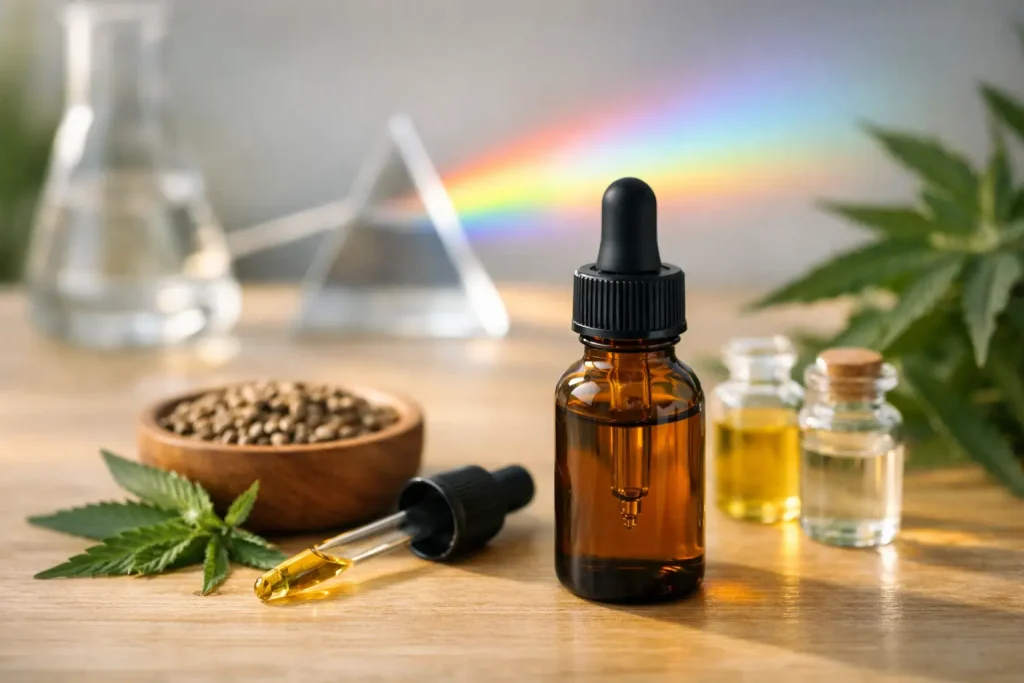
A CBD label can look reassuringly simple until you reach the words “broad spectrum”. What does broad spectrum mean in practice, and why does it matter for the CBD oil, gummies or balm you choose? It describes the type of hemp extract inside the product – but it is also a useful clue about what has been included, what has been removed, and what you should verify before buying.
For many people, broad-spectrum CBD offers a considered middle ground: more of the naturally occurring hemp plant compounds than a CBD isolate, without THC. That can make it an appealing option for everyday wellbeing routines, particularly if avoiding THC is a priority.
What does broad spectrum mean in CBD?
Broad-spectrum CBD is a hemp extract that contains CBD alongside a range of other naturally occurring plant compounds, while THC has been removed. Depending on the extract and formulation, these compounds may include minor cannabinoids such as CBG, CBC or CBN, as well as terpenes and flavonoids.
Think of it as a carefully refined whole-plant extract. Rather than using CBD in isolation, broad spectrum retains a wider profile of hemp-derived compounds. It is then processed to remove THC, before being blended into a finished format such as an oil, capsule, drink, gummy or topical product.
The precise profile will vary from product to product. “Broad spectrum” is not a guarantee that every cannabinoid or terpene found in hemp is present, nor does it tell you the amount of each compound. That is why transparent brands provide independent laboratory results for their batches rather than relying on broad category terms alone.
Why the wider plant profile matters
CBD does not exist alone in the hemp plant. Hemp also contains hundreds of naturally occurring compounds, and researchers continue to explore how cannabinoids and terpenes may work alongside one another. You may hear this described as the entourage effect.
The idea is promising, but it should be treated with appropriate care. Research into combined hemp compounds is still developing, and the experience is not identical for everyone. Broad-spectrum CBD is not automatically “stronger” or better than isolate CBD. The right choice depends on your preferences, your routine and your desired THC profile.
Broad spectrum, full spectrum and isolate: the difference
These three terms describe the extract, not necessarily the quality of a finished product. A high-quality CBD product should still have clearly stated CBD content, suitable ingredients and independent testing, whatever spectrum it uses.
Broad-spectrum CBD
Broad spectrum contains CBD and a selection of other hemp compounds, with THC removed. It is often chosen by people who want a more complete hemp extract while keeping THC out of their routine.
For a busy professional taking CBD oil before bed, someone adding a gummy to a daily wellbeing routine, or a fitness enthusiast using a topical after training, this balance can feel practical. You can choose a plant-rich formulation without deliberately introducing THC.
Full-spectrum CBD
Full-spectrum extracts retain a broader range of compounds from the original plant, including trace levels of THC where permitted. This is a meaningful distinction, even when the THC level is very low.
Some people specifically look for full spectrum because they prefer the least refined whole-plant profile. Others would rather avoid THC altogether. Neither preference is inherently right or wrong, but the label needs to make the difference clear.
CBD isolate
CBD isolate is the most refined option. It contains CBD that has been separated from the other compounds in the hemp plant, leaving a highly purified CBD ingredient.
Isolate can suit people who want the simplest possible formula, or who prefer to avoid other cannabinoids and terpenes. The trade-off is that it does not offer the wider plant profile associated with broad-spectrum extracts.
Does broad spectrum mean THC-free?
In a well-made broad-spectrum CBD product, THC should be removed from the formulation. However, “THC-free” is a claim worth checking rather than assuming. The most reliable confirmation comes from an up-to-date, independent laboratory report that shows the cannabinoid profile and testing method used.
Laboratory equipment has detection limits, so responsible testing language may refer to THC as “not detected” or “below the limit of detection”. This is more informative than vague reassurance because it shows that the product has been measured rather than simply described.
UK CBD rules are detailed and can change, while product legality depends on more than the word “broad spectrum” on the front of a bottle. Reputable retailers take compliance seriously and make quality documentation part of their product standard.
Can broad-spectrum CBD affect a drug test?
No CBD product can promise a negative drug-test result. Broad-spectrum products are designed to be THC-free, but testing standards, individual metabolism, product quality and the sensitivity of a test can all affect risk.
If you are subject to workplace, professional or competitive sport testing, take a cautious approach. Review the product’s independent testing, speak to the organisation responsible for testing if appropriate, and consider whether using CBD is suitable for your circumstances. Do not rely on a spectrum label alone.
How broad-spectrum CBD is made
Quality starts long before the final bottle is filled. Hemp plants are cultivated, harvested and extracted to obtain their useful plant compounds. Manufacturers then refine the extract to remove THC while aiming to retain selected cannabinoids and other beneficial hemp components.
The resulting extract is usually combined with a carrier oil for oral CBD oils. MCT oil is common because it is neutral in flavour and easy to measure, while hemp seed oil may be chosen by those who prefer a more recognisable hemp taste. In gummies, drinks and topical products, the extract is formulated differently to suit the format and intended use.
This process is why source and traceability matter. A broad-spectrum claim tells only part of the story. Organic cultivation, non-GMO ingredients, careful manufacturing and batch-specific third-party testing provide much more confidence in what you are taking.
How to choose a broad-spectrum CBD product
Start with the reason you are considering CBD. If you want a measured, flexible option, an oil allows you to adjust your serving gradually. Gummies are convenient and discreet, while drinks and teas can make CBD feel like an easy part of an existing ritual. Topicals are designed for use on the skin and are suited to targeted post-exercise or everyday body-care routines.
Next, look beyond the front label. A premium broad-spectrum product should clearly state the total CBD content, the suggested serving size and the full ingredients list. You should also be able to see evidence of independent third-party testing, including cannabinoid content and checks for relevant contaminants.
Consider your starting strength realistically. More milligrams are not automatically better. A lower serving can be a sensible place to begin, especially if you are new to CBD. Give your routine time, stay consistent and notice how it fits your day before changing the amount.
Purity Hemp Company uses broad-spectrum, THC-free CBD across its range for customers who value a plant-rich formulation, clear quality standards and straightforward everyday use.
A few sensible safety considerations
CBD is a wellness product, not a substitute for medical advice, a varied diet or a healthy lifestyle. If you take prescribed medicines, particularly medicines with warnings about grapefruit, speak with a pharmacist or clinician before using CBD. It is also sensible to seek professional advice if you are pregnant, breastfeeding, managing a health condition or planning to give CBD to a pet.
Choose pet-specific products for animals and follow the serving guidance carefully. Human CBD products may contain ingredients that are not appropriate for pets, so the format matters as much as the extract type.
Broad-spectrum CBD is often a strong choice when you want more than CBD alone but do not want THC as part of the formulation. Let the label start the conversation, then let clear testing, traceable sourcing and a routine you can maintain guide the final decision.

