
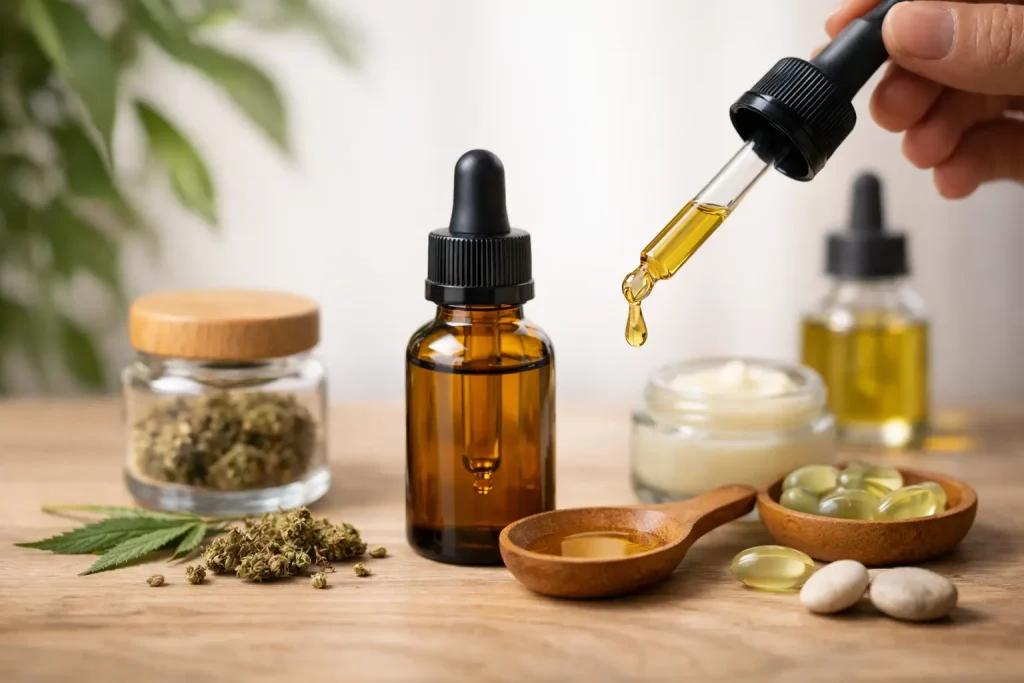
A CBD bottle may look simple, but the number on its label can raise a very practical question: how much should you actually take? This CBD dosage guide for beginners is designed to make that decision clearer. There is no single amount that suits everybody, so the most reliable approach is to understand the strength of your product, begin gently and give your routine time to show you what works.
CBD is often chosen as part of a wider wellbeing routine for calmer evenings, better sleep habits, post-training recovery or everyday balance. The aim is not to take the highest strength available. It is to find the lowest amount that feels useful for your individual needs.
CBD dosage guide for beginners: start with milligrams
CBD dosage is measured in milligrams, written as mg. This is the figure that matters most, not simply the size of the bottle or the number of drops you take.
For someone new to CBD, a sensible starting point is often 5-10mg once a day. Keep that amount consistent for several days before deciding whether to adjust it. If you do not notice the support you were hoping for and you are comfortable with the product, increase gradually in small steps – for example, by 5mg at a time.
Slow adjustments make it easier to understand your own response. Jumping from a small amount to a high dose can make a product feel unpredictable, especially when you are trying to establish whether it fits your routine.
Your best dose can depend on your reason for using CBD, your body weight and metabolism, your general sensitivity to supplements, the format you choose and the concentration of the product. A busy professional taking CBD oil for an evening wind-down may prefer a different routine from someone using a balm after exercise. Neither approach is automatically better.
Read the label before you dose
A clear label should tell you the total CBD content in the pack and, ideally, the CBD per serving. Those figures are not interchangeable.
Imagine a 10ml oil containing 1,000mg of CBD in total. That works out at 100mg per millilitre. If the supplied pipette has a 0.5ml marking, that amount contains approximately 50mg of CBD. In contrast, a 300mg bottle in the same 10ml size contains 30mg per millilitre. The bottles may look alike, but their strengths are very different.
This is why counting drops alone can be misleading. Drop size varies between pipettes, oils and bottles. Use the measurements marked on the pipette where possible, and check the product guidance for the intended serving.
Gummies, drinks, teas and patches are often more straightforward because the CBD content is usually stated per piece, serving or patch. A gummy containing 10mg lets you begin with one piece rather than estimating a liquid measure. Oils, however, offer more flexibility when you want to make small adjustments.
Choose a format that suits your day
The most effective CBD routine is usually the one you can maintain without fuss. Your preferred format should fit your goal, timing and lifestyle.
CBD oil is a popular choice for flexible, measured use. Place it under the tongue, hold it briefly according to the product instructions, then swallow. Some people like to take it at the same time each day, such as after breakfast or as part of an evening routine.
Gummies and drinks offer convenience, particularly when you are travelling, working or do not enjoy the taste of oil. As these formats pass through the digestive system, the timing and experience can differ from sublingual oil. Take this into account before adding more CBD too quickly.
Topical CBD products, such as balms and creams, are used on the skin rather than taken orally. Their usage is guided by the amount applied to the area, not by oral milligrams. Start with a small amount, follow the label and avoid broken or irritated skin unless the product specifically says otherwise.
Patches provide a measured, gradual option that can suit people who prefer a lower-maintenance routine. As with every format, check the CBD content per patch and the recommended wear time.
Give your routine enough time
CBD is not a one-size-fits-all experience, and more is not necessarily more effective. Give a new serving at least three to seven days of consistent use before changing it, unless you experience an unwanted effect.
A simple note on your mobile phone can be useful. Record the product, milligrams, time taken and the outcome you are looking for, such as how settled you feel before bed or how your body feels after a training session. This is not about chasing perfection. It is about noticing patterns and avoiding guesswork.
If you decide to increase your amount, make one change at a time. Do not change the dose, switch formats and alter the time of day all at once. A clear routine gives you clearer feedback.
Quality matters as much as quantity
A precise dose is only meaningful when you know what is in the product. Look for CBD with transparent sourcing, clearly stated cannabinoid content and independent third-party testing. These checks help confirm that the product contains the CBD level stated on the label and has been screened for relevant contaminants.
Broad-spectrum CBD can be a reassuring option for those who want more than CBD alone while avoiding THC. A THC-free broad-spectrum formula contains a range of naturally occurring hemp compounds, without detectable THC, subject to the product specification and testing.
At Purity Hemp Company, traceability and independently tested, organic broad-spectrum formulations are central to making CBD easier to choose with confidence. But even a premium product should be introduced gradually. Quality provides reassurance; a thoughtful routine helps you find your personal fit.
When to seek professional advice first
CBD is a wellness product, not a substitute for medical care or prescribed treatment. Speak to a GP, pharmacist or qualified healthcare professional before using CBD if you are pregnant, breastfeeding, have a liver condition, are preparing for surgery or take regular medication.
This is particularly relevant for medicines that may interact with CBD, including certain blood thinners, anti-epileptic medicines, antidepressants and treatments that carry a grapefruit warning. A pharmacist can help you assess your personal circumstances without guesswork.
Do not use an adult CBD serving guide for pets. Animals need product-specific guidance from a vet, and their size, health status and medicines all matter. Keep CBD products safely stored away from children and pets.
If CBD makes you feel drowsy, light-headed or unwell, reduce the amount or stop using it. Avoid driving, cycling or operating machinery until you know how a product affects you.
A calm way to begin
Start with a low, clearly measured serving, take it consistently and let your own experience guide the next step. CBD does not need to complicate your wellbeing routine. When the product is transparent and the dose is gradual, it can become one small, considered part of looking after yourself.

