

(National Suicide Prevention Week – September 5th – 11th)
Depression is a common mental disorder that affects millions of people worldwide. Researchers believe that Cannabidiol (CBD) shows promise as a potential treatment for depression, offering people a natural alternative to manage their mental health. In this article, we will explore how CBD, the non-psychoactive compound derived from the cannabis plant, might be able to offer relief.
Understanding Depression
Depression is not just feeling sad or down for a few days; it is a complex mental health disorder characterised by persistent feelings of sadness, hopelessness, and a loss of interest in activities that were once enjoyable.
Depression affects people in different ways and can cause a wide variety of symptoms, ranging from mild to severe. Some common symptoms include:
- Feeling down, upset or tearful.
- Restless, agitated or irritable.
- Guilty, worthless and down on yourself.
- Isolated and unable to relate to other people.
- No self-confidence or self-esteem.
This might lead to changes in your behaviour, and even physical symptoms such as:
- Difficulty speaking, thinking clearly or making decisions.
- Difficulty sleeping, or sleeping too much.
- Using more tobacco, alcohol or other drugs than usual.
- Physical aches and pains with no obvious physical cause.
- Self-harming or suicidal behaviour.
Depression is believed to result from a combination of genetic, environmental, and biochemical factors, such as going through a traumatic event, experiencing long-term stress, or the misuse of alcohol and drugs.
Existing Depression Treatment
Depression involves imbalances in neurotransmitters such as serotonin, dopamine, and norepinephrine, which play a crucial role in regulating our mood. Traditional treatments for depression often target these neurotransmitter imbalances, such as:
- Antidepressant Medications: Works by affecting the levels of neurotransmitters in the brain, in particular serotonin, dopamine, and norepinephrine.
- Psychotherapy (Talk Therapy): Talking to a therapist or counsellor to address and manage depression through a specific treatment, such as changing negative thought patterns and behaviours through cognitive behavioural therapy (CBT).
Often, a combination of therapies, such as medication and lifestyle changes, is the most effective approach to treating depression. Though effective, traditional depression treatments can have negative side effects. For example, antidepressant medications can cause headaches, nausea, sexual problems and diabetes, and lead to dependency and withdrawal symptoms.
For this reason, amongst others, CBD has gained attention as a potential alternative or complementary treatment for depression as it has minimal side effects, is non-addictive, and made from natural ingredients. Let’s look at how it can help in more detail.

Does CBD Help With Depression?
Unlike its better-known counterpart, Tetrahydrocannabinol (THC), CBD does not produce a high. Instead, CBD is known for its potential therapeutic properties for various medical conditions, including depression.
Neurotransmitter Regulation
Referred to as the “feel-good” chemical, serotonin is believed to contribute to feelings of happiness, with low levels of serotonin linked to depression. Although CBD doesn’t boost serotonin levels, it might affect how your brain’s chemical receptors respond to the serotonin that’s in your system. Similar to traditional antidepressants, it is thought that CBD binds to your receptors to slow or stop the degradation of serotonin. And the existing scientific studies show promising results:
- A 2014 animal study found that CBD’s effect on these receptors in the brain produced both antidepressant and anti-anxiety effects.
- Authors of a 2018 review also noted that many studies have shown anti-anxiety, antidepressant, and antipsychotic actions in animal models.
- Another study in 2019 concluded that CBD induces rapid-acting antidepressant-like effects.
- An open-label trial involving 31 young people aged 12-25 years with cognitive-behavioural therapy and/or antidepressant medication saw a 42.6% reduction in Overall Anxiety Severity and Impairment Scale (OASIS) scores.
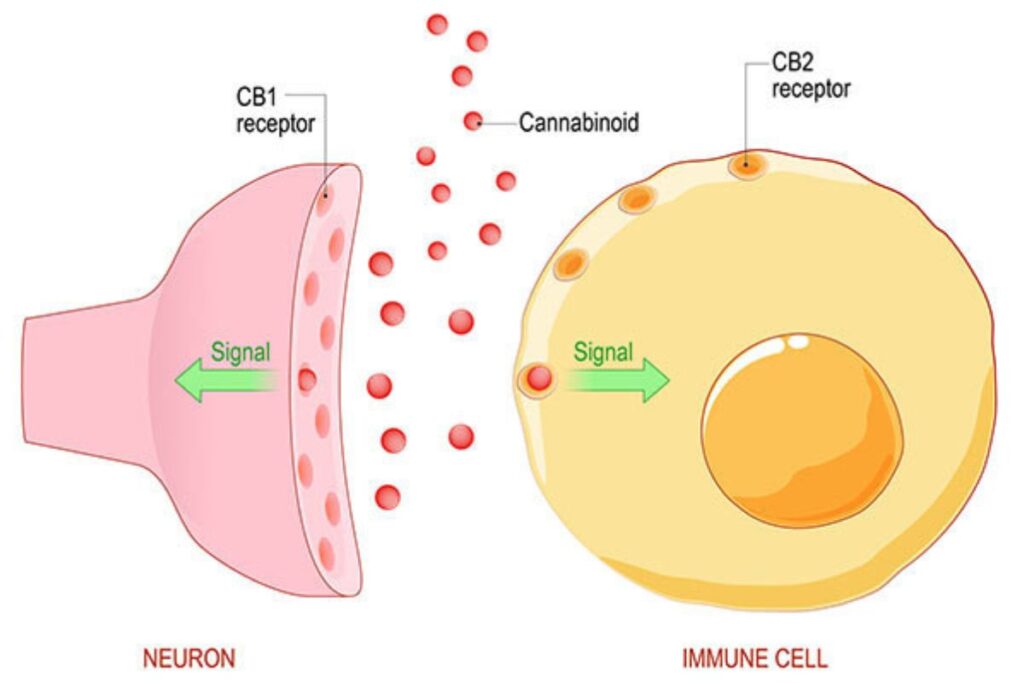
- Researchers also believe CBD helps repair neural circuitry in the prefrontal cortex and hippocampus, which get damaged as a result of depression.

Image via: Aychman, Mackenzie, et al. “Cannabidiol’s neuroprotective properties and potential treatment of traumatic brain injuries.” Frontiers in Neurology, vol. 14, 2023.
Stress & Anxiety Relief
Stress and anxiety often accompanies depression, and can exacerbate its symptoms. CBD is well-known for its anxiolytic (anxiety-reducing) properties, which could also help people to manage their depression. Similar to how it can help slow or stop the degradation of serotonin, CBD is thought to interact with our endocannabinoid system, by binding to its receptors, to regulate a range of our cognitive and physical functions (including stress and anxiety).
- Of 387 current or past-CBD users, 42.6% use CBD for anxiety and 37% use CBD for stress. Of those 42.6%, 86.5% responded that they felt less anxious. And for those using CBD for stress, 92.2% responded that they felt less stressed.
- Researchers evaluated the effects of CBD treatment in 72 adults with either anxiety or sleep problems and, after 2 months, 78.1–79.2% of participants reported improvements in anxiety symptoms.
- A review of eight related studies concluded that CBD has a promising role as alternative therapy in the management of anxiety disorders.
Improved Sleep
Sleep disturbances are both a symptom and potential cause of depression. It is thought that CBD can help people to sleep better and for longer, which could contribute to better overall mental health.
- Dr. Whitelocke for Forbes states that CBD can suppress this dysregulated cycle of stress hormone overactivation and equalise the sleep and wake rhythm through counteracting hormones, helping people with insomnia to sleep.
- In a study examining the effects of cannabis on insomnia, researchers found CBD more effectively decreased symptoms of insomnia than THC.
- Researchers evaluated the effects of CBD treatment in 72 adults with either anxiety or sleep problems and, after 2 months, 56.1% reported improvements to sleep.
- In a 2021 cross-sectional study, 48% of people taking CBD for sleep reported that it helped them to fall asleep quicker, with 40% saying it also helped them to sleep better.
As a natural alternative to alcohol, CBD might also help to combat alcohol misuse, which is a leading factor for depression.
How Much CBD Do I Need for Depression?
There aren’t any official guidelines on the dosage of CBD you should use for depression. In general, the recommendation is to take a low and slow approach; start with a small amount – such as 10 to 20mg – and gradually increase it until you experience relief.
While the World Health Organisation concluded that CBD is safe for use as it does not induce major side effects or physical dependence, does not get you high, and is not associated with abuse potential, it might interact with medications. Therefore, it’s a good idea to talk to your doctor and review medications and other supplements that you’re taking before you begin use.
Choosing CBD for Depression
Navigating the CBD market can be difficult due to its lack of regulation. However, there are some clear factors to look out for when choosing the best CBD product for you.
- Source and Quality: You should opt for CBD derived from organically grown hemp, as this ensures minimal exposure to harmful chemicals. You should also look for third-party laboratory reports to verify how pure and potent your product is, and to ensure there are no contaminants in the product.
- Type of CBD: Broad-spectrum CBD is a great option for those who want to experience the effects of CBD, without consuming Tetrahydrocannabinol (THC), the psychoactive compound in the cannabis plant.
- Product Form: CBD comes in various forms, including oils, edibles, and topicals. For depression relief, oral consumption via oils or edibles is the most effective.
-
 CBD Jelly Domes x20£12.00 — or subscribe and save 20%
 -
 1000mg CBD Oil Tincture£24.00 — or subscribe and save 20%
 -
 Harmony Hemp Tea£8.00 — or subscribe and save 20%
Can CBD Make Depression Worse?
Although CBD has gained attention for its potential to alleviate symptoms of depression, its individual responses to CBD can vary, and in some cases, it may not have the intended therapeutic effect. This might be for a few reasons, including dosage, interactions with medications, the quality and purity of your chosen product, and the fact that CBD may not address the root causes of depression in some individuals, such as trauma.
Thus, though the current evidence is promising for the use of CBD to help depression, more scientific research on the efficacy and safety of CBD use for mental disorders is required, including controlled clinical trials.
Additionally, it’s important to choose high-quality CBD products from reputable sources, and consult with your doctor if you’re unsure if it will interact with your medication.
We are Purity Hemp, the UK’s #1 Online CBD provider. Backed by science, and built on the principles of traceability, transparency & trust, we are dedicated to improving the health & wellness of all our customers.
We are proud to be one of the only companies to guarantee full traceability from seed to shelf with our premium range of products, tested by third-party, independent quality control analysts.
Sources
- Burns, J. (2018). WHO Report Finds No Public Health Risks Or Abuse Potential For CBD.
- Berger M, Li E, Rice S, Davey CG, Ratheesh A, Adams S, Jackson H, Hetrick S, Parker A, Spelman T, Kevin R, McGregor IS, McGorry P, Amminger GP. (2022) Cannabidiol for Treatment-Resistant Anxiety Disorders in Young People: An Open-Label Trial.
- Crippa JA, Guimarães FS, Campos AC, Zuardi AW. (2018) Translational Investigation of the Therapeutic Potential of Cannabidiol (CBD): Toward a New Age.
- Forbes (2023) CBD For Sleep: How It Works, Benefits And Risks.
- Harvard Health Publishing (2000). Health Information and Medical Information – Harvard Health.
- Healthline. (2019). CBD for Depression: What Are the Benefits?
- Linge R, Jiménez-Sánchez L, Campa L, Pilar-Cuéllar F, Vidal R, Pazos A, Adell A, Díaz Á. (2016) Cannabidiol induces rapid-acting antidepressant-like effects and enhances cortical 5-HT/glutamate neurotransmission: role of 5-HT1A receptors.
- MIND (2019). Depression Symptoms.
- MIND (2023) What side effects can antidepressants cause?
- Moltke, J., Hindocha, C. (2021) Reasons for cannabidiol use: a cross-sectional study of CBD users, focusing on self-perceived stress, anxiety, and sleep problems.
- NHS (2021). Overview – Depression in adults.
- NHS (2021). Overview – Antidepressants.
- NHS (2021). Overview – Cognitive behavioural therapy (CBT).
- Shannon S, Lewis N, Lee H, Hughes S. (2019) Cannabidiol in Anxiety and Sleep: A Large Case Series.
- Skelley, J.W., Deas, C.M., Curren, Z. and Ennis, J. (2020). Use of cannabidiol in anxiety and anxiety-related disorders.
- Vigil JM, Stith SS, Diviant JP, Brockelman F, Keeling K, Hall B. (2018) Effectiveness of Raw, Natural Medical Cannabis Flower for Treating Insomnia under Naturalistic Conditions.

