

People with endometriosis experience chronic pain and other symptoms that can be difficult to manage. Although there is limited research on the specific relationship between the two, studies and clinical trials suggest that CBD has a range of potential therapeutic benefits, including reducing inflammation and pain, which could help those with endometriosis to manage their symptoms.
Table of Contents
What is Endometriosis?
Endometriosis is a chronic condition that affects millions of people worldwide. It occurs when tissue similar to the lining of the uterus grows outside the uterus, such as the ovaries and fallopian tubes. The symptoms of endometriosis differ from person to person, but common symptoms include heavy periods, period pain, pelvic pain, pain during sex, bowel and urinary problems, nausea and vomiting, and fatigue.
While there is currently no cure for endometriosis, various treatments aim to manage symptoms and improve quality of life, such as painkillers, hormone medicines and contraceptives, or surgery to remove endometriosis tissue or affected organs. One alternative treatment that is gaining attention is Cannabidiol (CBD), known for its potential therapeutic properties, including reducing inflammation and pain relief.
What is CBD?
Cannabidiol, better known as CBD, is one of the compounds found in the cannabis plant. Unlike THC, CBD is a non-psychoactive compound and does not induce the “high” or other intoxication symptoms often associated with cannabis. Instead, CBD interacts with our endocannabinoid system (ECS) and influences its CB1 and CB2 receptors, which can help to regulate several of our cognitive and physical functions, such as pain, mood, appetite and stress. This makes it a promising solution for several conditions and symptoms, including endometriosis.

Can CBD Help Endometriosis?
More research is required to determine the effectiveness of CBD in treating endometriosis. However, existing research and anecdotal evidence suggests that it can help relieve common symptoms, such as inflammation and pain.
Inflammation
Endometrial inflammation is a major factor in the establishment and progression of endometriosis. While inflammation does play an important role in activating your body’s immune response to protect against foreign bodies such as bacteria and viruses, extended or extreme inflammation can cause long-term health issues. CBD has proven anti-inflammatory properties as it lowers the production of pro-inflammatory cytokines by the immune system, which could relieve inflammation and pain associated with endometriosis.
Indeed, in one trial, scientists observed that CBD influences CB1 and CB2 receptors of the ECS to reduce inflammation and analgesia when reacting to a pain stimulus. Another 2022 study also concluded that CBD has effective and coordinated effects in endometriosis suppression.
Pain Relief
CBD has proven analgesic (pain-relieving) properties, which could help people better manage their endometriosis pain. Indeed, a review of studies on the body of research on CBD from 1975 to 2018 concluded that CBD is effective in overall pain management and doesn’t have negative side effects.
One 2019 study found that, in women with endometriosis, CBD was one of the highest rated in terms of self-reported effectiveness in pain reduction.
In a later 2022 study on rats, it was concluded that, due to its anti-inflammatory, antioxidative and antiangiogenic effects, CBD might be a therapeutic agent candidate for endometriosis.
Inhibits Cell Growth
In order to thrive, endometriotic cells need blood vessels and capillaries. It is thought that CBD can inhibit this process in cells, as they inhibit vascularisation in cells.
Research on CBD for cancer found that it can induce apoptosis, or cell death, for damaged cells. When researchers exposed normal cells to CBD under the same conditions, they didn’t see the same effects, which suggests that CBD can selectively target the damaged cells while leaving healthy cells alone.
Indeed, one study found that once daily doses of 2mg/kg THC for 28 days inhibited the formation of endometrial cysts.
Supports Gut Health
Though more research on humans is needed, one study has shown that the gut microbiome and certain gut metabolites may contribute to the progression of endometriosis and lesion growth. Research has also shown that many people with endometriosis experience GI problems, such as irritable bowel syndrome.
There is some evidence to suggest that CBD could be beneficial for gut health.
One 2017 study found that cannabinoids could be helpful for certain symptoms of inflammatory bowel disease Other research in 2017 found that CBD reduced inflammation, as well as prevented inflammation from occurring at all, in mice with ulcerative colitis. A later 2018 study found that full-spectrum CBD oil, which contained some THC, helped ease some Crohn’s disease symptoms.
How to Use CBD for Endometriosis
If you’re considering using CBD to help manage your endometriosis symptoms, there are some key things to consider.
- Medications: CBD has the potential to interact with certain medications, so it’s important to consult with a healthcare professional before taking CBD.
- Type of CBD: Broad-spectrum CBD is a great option for those who want to experience the effects of CBD without consuming THC, the psychoactive compound in the cannabis plant. Clinical reports suggest that broad or full-spectrum CBD may have a better effect due to the number of cannabinoids and other plant compounds they contain that work together, otherwise known as the entourage effect.
- Type of Product: CBD products come in various forms, such as oils, topicals, capsules, edibles, and vape pens, so you should choose a delivery method and dosage that suits your needs.
- Dosage: Finding the right dose and administration method can be a trial-and-error process as results can vary significantly from person to person. Start with a low dose and gradually increase it while monitoring its effects.
- Source and Quality: Choose CBD derived from organically grown hemp, as this ensures minimal exposure to harmful chemicals. You should also look for third-party laboratory reports to verify how pure and potent your product is, and to ensure there are no contaminants.
- Individual Variability: The effectiveness of CBD may vary from person to person; what works for one individual may not work for another.
Recommended Products
These products have been tested by third-party, independent quality control analysts via a vigorous process, and the full ingredients list and certifications are available to view on the specific product pages. In addition to this, the Banned Substance Control Group (BSCG) has awarded us gold certification meaning our oil is 100% THC-free
-
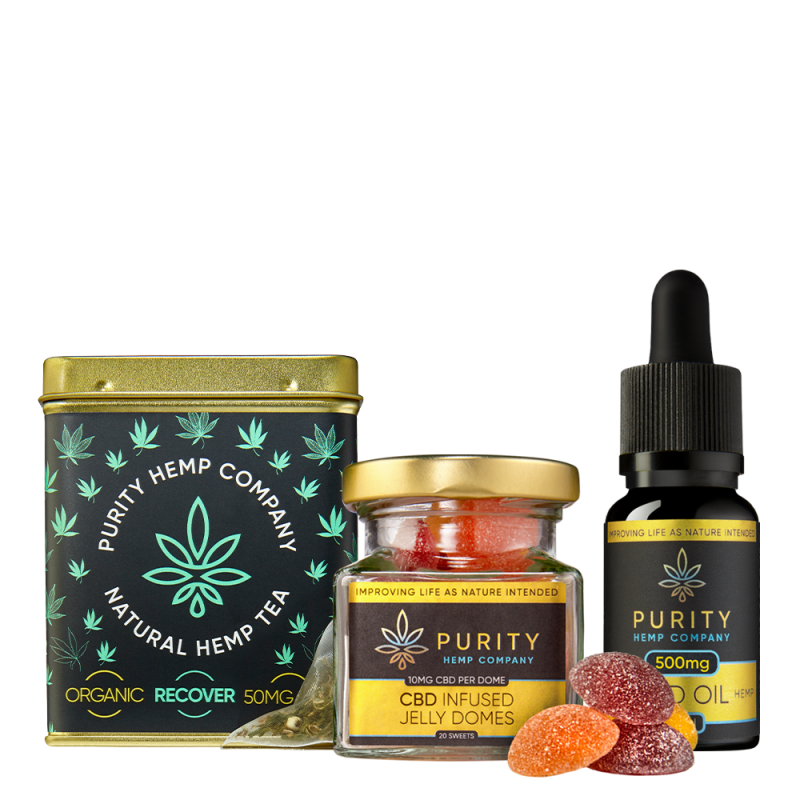 CBD Starter Kit£45.60 — or subscribe and save 20%
 -
 4000mg CBD Oil Tincture£87.50 — or subscribe and save 20%
 -
 CBD Pain Relief Wraps£18.00 — or subscribe and save 20%
Need additional help? Take our CBD Quiz for product recommendations in minutes, or read our full guides on How to Choose the Right CBD Product and The Different Types of CBD.
We are Purity Hemp, the UK’s #1 Online CBD provider. Backed by science, and built on the principles of traceability, transparency & trust, we are dedicated to improving the health & wellness of people around the world. We are proud to be one of the only companies to guarantee full traceability from seed to shelf with our premium range of CBD products, tested by third-party, independent quality control analysts.
Sources
Armour, Mike, et al. “Self-Management Strategies amongst Australian Women with Endometriosis: A National Online Survey.” BMC Complementary and Alternative Medicine, vol. 19, no. 1, 15 Jan. 2019, https://doi.org/10.1186/s12906-019-2431-x.
De Filippis, Daniele, et al. “Cannabidiol Reduces Intestinal Inflammation through the Control of Neuroimmune Axis.” PLoS ONE, vol. 6, no. 12, 6 Dec. 2011, p. e28159, https://doi.org/10.1371/journal.pone.0028159.
Escudero-Lara, Alejandra, et al. “Disease-Modifying Effects of Natural Δ9-Tetrahydrocannabinol in Endometriosis-Associated Pain.” ELife, vol. 9, 14 Jan. 2020, p. e50356, www.ncbi.nlm.nih.gov/pmc/articles/PMC6977967/, https://doi.org/10.7554/eLife.50356. 2022.
Freimuth, Nadine, et al. “Antitumorigenic Effects of Cannabinoids beyond Apoptosis.” The Journal of Pharmacology and Experimental Therapeutics, vol. 332, no. 2, 1 Feb. 2010, pp. 336–344, pubmed.ncbi.nlm.nih.gov/19889794/, https://doi.org/10.1124/jpet.109.157735.
Genovese, Tiziana, et al. “Molecular and Biochemical Mechanism of Cannabidiol in the Management of the Inflammatory and Oxidative Processes Associated with Endometriosis.” International Journal of Molecular Sciences, vol. 23, no. 10, 12 May 2022, p. 5427, https://doi.org/10.3390/ijms23105427.
Hasenoehrl, Carina, et al. “Cannabinoids for Treating Inflammatory Bowel Diseases: Where Are We and Where Do We Go?” Expert Review of Gastroenterology & Hepatology, vol. 11, no. 4, 3 Apr. 2017, pp. 329–337, www.ncbi.nlm.nih.gov/pmc/articles/PMC5388177/, https://doi.org/10.1080/17474124.2017.1292851.
JoJack, Beth. “Gut Microbiome May Impact the Progression of Endometriosis.” Medical News Today, 2 Feb. 2023, www.medicalnewstoday.com/articles/gut-microbiome-may-impact-the-progression-of-endometriosis.
Kafil, Tahir S., et al. “Cannabis for the Treatment of Crohn’s Disease.” The Cochrane Database of Systematic Reviews, vol. 11, 8 Nov. 2018, p. CD012853, www.ncbi.nlm.nih.gov/pubmed/30407616, https://doi.org/10.1002/14651858.CD012853.pub2.
Nabi, Michelle Y., et al. “Endometriosis and Irritable Bowel Syndrome: A Systematic Review and Meta-Analyses.” Frontiers in Medicine, vol. 9, 25 July 2022, https://doi.org/10.3389/fmed.2022.914356.
NHS. “Endometriosis.” NHS, 5 Sept. 2022, www.nhs.uk/conditions/endometriosis/.
Okten, Sabri Berkem, et al. “Cannabidiol as a Potential Novel Treatment for Endometriosis by Its Anti-Inflammatory, Antioxidative and Anti-Angiogenic Effects in an Experimental Rat Model.” Reproductive BioMedicine Online, Feb. 2023, https://doi.org/10.1016/j.rbmo.2023.01.018.
Vučković, Sonja, et al. “Cannabinoids and Pain: New Insights from Old Molecules.” Frontiers in Pharmacology, vol. 9, no. 9, 13 Nov. 2018, www.frontiersin.org/articles/10.3389/fphar.2018.01259/full, https://doi.org/10.3389/fphar.2018.01259.
Xiong, Wei, et al. “Cannabinoids Suppress Inflammatory and Neuropathic Pain by Targeting α3 Glycine Receptors.” The Journal of Experimental Medicine, vol. 209, no. 6, 14 May 2012, pp. 1121–1134, www.ncbi.nlm.nih.gov/pmc/articles/PMC3371734/, https://doi.org/10.1084/jem.20120242.

